Visar inlägg med etikett listor. Visa alla inlägg

lördag, december 31

Snyggaste filmaffischerna 2011

Jag hade tänkt skriva div. pretentiösa utläggningar om det gånga året, jag hade tänkt skriva om de bästa filmerna jag sett under det gångna året, eller något...men orka. Jag tänker göra något mer awesome och mindre omständigt.

Men först en kort reflektion. I en diskussion på rollspel.nu just ny beskylls jag för att vara sinofil, ha ett bias gentemot amerikansk film till förmån för asiatisk film, etc. Men sanningen är att av cirka 70 filmer jag såg det gånga året, var 3 asiatiska, och en av dessa var en anime, och en annan Shanghai, som knappt räknas som en asiatisk film, den bara utspelar sig där. The Haunted House Project, en riktigt medioker rulle för övrigt, var alltså den enda "riktiga" asiatiska spelfilm som jag såg 2011. (Eller okej, jag borde räkna "The Circle", eftersom den är från Iran, men jag tänkte nog mer på film från östasien). Det är inte så att jag inte fortfarande är intresserad av asiatisk film, det är jag, och det finns maaaassor av asiatiska filmer på min "vill se"-lista, men av någon anledning känns många av dem mer daunting att börja titta på än amerikanska eller europeiska filmer. Jag såg för övrigt massor av europeisk film under året, jag orkar inte räkna exakt, och jag misstänker att det är där min verkliga passion ligger numera. Europeisk, asiatisk eller australiensisk skräckfilm är jag vad känt mig allra mest taggad på i filmväg under det gångna året, och det kommer märkas när jag nu listar de bästa filmaffischerna från filmer jag såg 2011:

Uninhabited
Jag gillar extremt minimalistisk skräckfilm, och det har Uninhabited going för sig. I stort var den väl en besvikelse, inte läskig eller psykologiskt tät nog, men affischen är ett litet mästerverk i kategorin And I Must Scream; jag älskar ångest i paradiset-temat:


(Större bild).
Det är inte ofta en filmaffisch allena får mig att se en film, men den här gjorde det. Hela kompositionen av bilden är perfekt, varenda detalj snygg och fängslande, ner till typsnitt och textplacering. Fucking awesome.


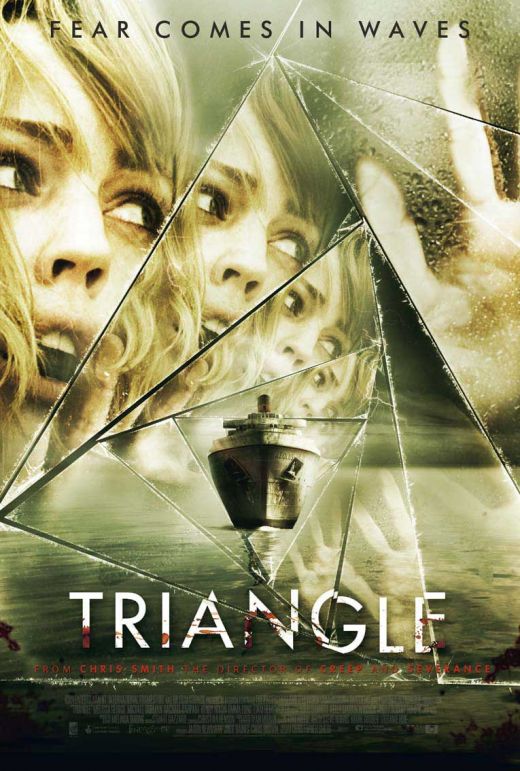
Triangle
är däremot en film som levererar. Plotten är intrikat, och hela alltet välgjort, berörande och tillfredställande. Det här är en psykologisk film som blir bättre ju mindre man vet om den på förhand, så jag ska inte säga mer, men affischen är snygg på samma sätt som Uninhabiteds, om än inte lika perfekt så åtminstone med en noga genomtänkt komposition, och liknande estetik som leker med snygga tjejer, blod och blå himmel.

(Större version).
Det enda jag inte gillar med den här affischen är att det är något med den som ser alldeles för grindhouse ut, kanske speciellt den där röda texten uppe till vänster. Den alternativa affischen är också intressant.


Altitude

Och sen finns det såna här filmaffischer som liksom kör Reign of Fire-paradigmet och liksom tvingar en att se rullen enbart på pur awesome. Altitude är knappast nåt mästerverk, men i skarp kontrast till Reign of Fire så håller den iallafall vad den lovar på filmaffischen, och handlar mer eller mindre de facto om Cthulhu som antastar ett flygplan sexuellt:

(Större version).

Jag har ingen djupare analys här, det är helt enkelt en snygg affisch. Sparsmakad, hotfull, awesome. Taglinen är förstås töntig, men det finns värre varianter...


The Disappearance of Haruhi Suzumiya
Problemet med att designa en poster till den här filmen var presumably att den, liksom tv-serien, egentligen inte handlar om nånting. Haruhi Suzumiya är slice of life-drama at it's finest, förvisso med en fantasyartad och totalt vansinnig premiss, men den är liksom svår att skildra i bild, jag har iaf ingen aning hur man skulle gjort det vad gäller den här rullens karaktärsdrama runt tidsparadoxer (möjligen något i stil med variantpostern till Triangle ovan?). Jag tror därför det var ett pragmatiskt val att bara ha casten som lutar sig mot en vägg och ser koola ut:

(Större verre).
Men ett lyckat pragmatiskt val; jag tycker väldigt mycket om karaktärsdesignen i Haruhi, färgskalan och ljuset och vinkeln är snygg, och japanska tecken är koola. Men framförallt är det en poster med attityd somehow; de står basically där och tittar uppfordrande på en att gå och se deras film. Om liknande upplägg för affischer till spelfilmer någonsin blir så här bra får ni gärna peka mig till ett exempel; oftast när folk ska stå och posera på spelfilmspostrar ser de bara stela och plastiga ut; liksom.


Let Me In
Filmaffischen är kanske det enda den här rullen gör bättre än originalet (though vissa utländska varianter till originalfilmen var briljanta). De flesta Let Me In-postrar är förvisso mediokra, men den här äger:
(Större verre).
Jag älskar den här bilden; den sätter tonen från boken perfekt, liksom lurar en att det rör sig om nån sorts såsig feelgoodfilm om vänskap, tills man märker den lilla detaljen som är...fel. Karaktärerna är ensamma, hand i hand, i ett ödsligt, kallt snölandskap, i både faktisk och känslomässig bemärkelse. Det enda som är fel är träden; det borde ha varit en backdrop av byggnader snarare, berättelsen är så...urban.


Sennentuntschi
Det är alltid koolt när spelfilmer har tecknade postrar in this day and age, men sen finns det de som går bortom att plocka pluspoäng för att det är udda, och går vidare rakt in i awesomeland:

(Större bild, och tro mig, den här gången är det värt det).

Det händer så mycket på den här affischen och det är så vackert. Jag ska erkänna att jag blev lite besviken, för medan Sennentuntschi definitivt är en riktigt bra film (trailer här), så är den mer av en weird dramathriller, lite Wicker Man typ, än en fantasyfilm, men dess premiss med en magisk docka hade kunnat få en att tro att den är det senare, och det tycks mig som filmaffischen också anspelar på det, den ser helt enkelt sagolik ut, med sina små skuggteater-liknande figurer och gammeldags drömska virvlar. Filmen var alltså inte riktigt vad affischen utlovade...tills man tänker efter, det här är ingen Reign of Fire. Sagodimensionen av filmen finns där, det är mest att den inte faktiskt sker i narrativet så mycket som existerar i bakgrunden i karaktärernas medvetande, och folktron är en viktig aspekt i handlingen (och det går att läsa in fantasyelement om man vill, ett finns där odiskutabelt, resten är...tolkningsfrågor). Affischen eftersträvar inte att luras, utan att belysa och ge credds åt en specifik bit av filmens tematik och inspirationen bakom den, och det gör den fucking grandiost. Sennentuntschi-affischen är inte bara snygg, den förstärker dramat, stämningen och mystiken i filmen den är gjord för, särskilt när man skärskådar de många detaljerna på den, som är små skuggteater-varianter av filmens händelser.

Men vad fan är grejen med den alternativa postern? Det är som om någon tänkte "uhm, hörst du die Menschen...nu när vi gjort die schönsten Film-Poster in der Welt, ska vi inte ta och göra en wirklich widerwärtig und mittelmäßig en som alternativ? De har ju så dålig smak de där amerikanerna, de kanske föredrar en riktigt medioker affisch..."

Jag fattar helt enkelt inte.

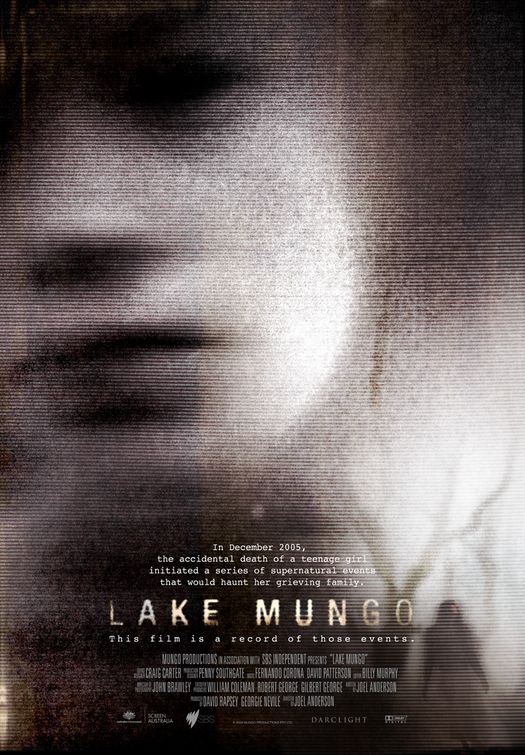
Det är också lite synd att jag inte fått mig en bra titt på filmaffischen när jag pratade med regissören, jag hade velat ge honom credds för den snyggaste filmpostern sen Lake Mungo...

torsdag, december 2

Top Ten Most Bloated (and Awesome!) Military Stuff Ever

As we'll later learn from this post, the one who invests the most in military technology and tools almost always wins. Yet, once this paradigm is adopted, it can easily go waaay to far. A prime example of this was the nazis, who were so overly enthusiastic about superweapons that they even gave birth to the nazi super science-trope. And that's really the whole point, fuck strategic and economic considerations; superweapons are awesome. I give you - the most blatantly bloated, advanced and pricey (often vastly overrated, sometimes actually rather efficient) military stuff in history:

10. The Maginot Line

Like basically everyone else, the french managed to die a whole lot in World War 1. Actually, they died so much that the whole country got a manpower shortage in the decades to come. This was seen as a strategic problem, for the french were not stupid - they realized that Germany would come back with a vengeance. Oh, wait, they might have been stupid after all, given how they choose to mitigate this problem. The defense minister André Maginot got the "great" idea to build a giant line, several kilometers deep, of fortresses, turrets, artillery, tank stops and stuff along the borders to Germany and Italy. This would allow the relatively small french army to withstand an attack, and buy time to draft older men into the army. In practice, it might have been one of the dumbest investments in history, as a): static defenses would turn out to be rather worthless with the new doctrines and technologies, b) the line didn't cover the border to fucking Belgium. You all know what happend next.

So, was the maginot line awesome? Well, a bit I guess. Expensive; definitely. Bloated? God yes.

9. M50 Ontos

This is a tank destroyer that was used in the Vietnam War. The US Army originally decided it was too absurd to be built, and cancelled the order. This was after firing all the guns at once during prototype testing knocked bricks out of nearby walls. The Marine Corps, though, realized this tool was to cool not to have, and ordered 297 of them. They apparently turned out to be rather useful during the war, even though they were used for infantry support rather than their original puporse (tank-raping), but the awesome design did have some disadvantages of course, otherwise it couldn't justifiably be called "bloated" - in this case, the thing had to be loaded from the outside, making the crew vulnerable to snipers.

So why was it awesome? Just look at it. It had not one, not two, not three...not four...not five...but six 106 mm recoilless rifles. Lest you not be confused by the word "rifle" here, we're talking about stuff so big that stuff a third of its size has to be mounted on turrents and wheels when infantry use it (for example the Bofors 37 mm). And again; six of them.

8. Schwerer Gustav

Ok, if the french has the Maginot Line, the germans needs something to blast their way through it with, right? That's where this baby came in. Except, the nazis didn't actually need to blast through the Maginot Line, as they could just walk around it. So yes; unnecessary technology; check.

The Schwerer Gustav was a gun so absurdly big that it had to be mounted on a train. The various european powers had constructed such cannons before, so of course the nazis, true to form, had to beat them all. The result was the largest calibre rifled weapon in history ever to see actual combat. On the receiving end was, of course, the poor, poor russians. We're talking shells this big. And still, for all its awesomeness, Schwerer Gustav was only actually used during the Siege of Sevastopol, spending the rest of the war being moved back and forth to places where someone thought it could be of use, yet it never was. I can imagine the talk at headquarters:

"Ok, so where do we need the absurdly gigantic railway gun?"
"Err...I dunno...maybe you can blast Leningrad with it?"
"When we managed to actually get it there, the siege would be long over"
"Oh, alright...use it against Stalingrad then?"
"Isn't that a wee bit overkill? We don't need that kind of firepower there"
"But...but...it's....awesome".

7. Lun-class Ekranoplan

Next to the nazis in terms of superweapon fetisch, the soviets put their vast resource base to good use in constructing some of the wierdest shit ever. Ekranoplans are pretty bizzare to begin with, being "flying boats" somewhere halfway between a hovercraft and an aircraft, vehicles that uses the so-called ground effect to basically float a few meters above the ground. That's awesome by itself, but the MD-160, the only Lun-class Ekranoplan actually built, was also very large (73 m, rivalling modern jumbo jets) and equipped with six missile launchers, pretty much silos really, carrying these babies for ground attacks. It's still around; rotting away in a town at the Caspian shores that's bleak, run-down and god-forsaken in that particularly depressing way only post-sovietic stuff can be. It's not pretty, but still, one really should look at these pictures (and this video, it appears about 4:40 minutes in) just to realize the awesome. A huge object similar to it was spotted in the Caspian Sea area by US reconaissance sattelites in the 60's and dubbed "The Caspian Sea Monster", but it seems they could never find out exactly what it was, making for some intriguing and awesome possibilities.

6. Timurid War Elephants

In 1398, When Tamerlane went, very literally, medieval* on the Sultanate of Delhi, he captured a host of indian war elephants that he seems to have appreciated to an almost fetischistic degree. Tamerlane had already combined horse archers, siege artillery and heavy tarkhan cavalry into steppe warfare's grande finale in history, so naturally, he just had to add the only thing (except chariots) that was missing among the most awesome stuff of pre-modern war. Accordingly, he had the elephants dragged all the way back to Samarkand, and later deployed them in the epic Battle of Angora against the Ottoman Turks and their sultan Bayazid, together with Tamerlane considered the greatest general of the age. Historians seem to disagree about how many the elephants were (but it's known that Tamerlane's army faced and defeated about a hundred elephants when they invaded Delhi) and to what degree they were actually useful in the battle, but that doesn't matter. In any case, the Ottomans were crushed, and how could they not be? They were facing mongol hordes with knights, and cannons, and armored fucking elephants! If not by superior tactics and/or numbers, Tamerlane would still have won on sheer awesome.

*"The killing and wanton destruction that characterized the Delhi campaign may be unsurpassed in history" - Vernon O. Egger

5. The Great Wall of China

The Great Wall had its origins in several different systems of defensive earthen walls between the Warring States of antiquity. Once the king of Qin had defeated the other states, he declared himself emperor and embarked on extending and joining together the different walls into a single, giant one. The human toil and misery this caused in the laborers became stuff of legends in China, and later chronicles echoes with hatred against the Qin emperor. A common myth is that the bones of dead builders became filling stuff in the Great Wall. More than a thousand years later, the wall had fallen into ruin and was barely a heap of earth, and was reconstruced by the Ming dynasty, in stone and brick, but spanning over a somewhat different area than the original wall. Both incarnations of the wall were of absolutely epic lengths and is generally considered among the greatest achievements of human civilisation, yet it can be debated how effective they were. The traditional view is that the walls were built to ward off the barbarians of the northern steppes; if that's the case, they were epic fail. While they might have discouraged lesser war bands, China has been successfully invaded by nomads from the north so many times it's almost absurd - Xiongnu, Jurchens, Tanguts, Mongols, Khitans, Turks, the list goes on and on. The wall thus stand solidly on the list of the most worthless defensive structures ever built.

A less common but interesting viewpoint is the theory that the wall were never intended to keep barbarians out, but the chinese in. With this line of reasoning, the idea is that the ruler's wanted to keep the peasant population of China from getting dangerous influences and ideas from the nomadic population of the steppes. Restrictions on free mobility has been a common feature in despotic regimes throughout history, so it's an interesting possibilty.

In any case, the wall is the very definition of epic, expensive, bloated, and awesome.

4. Korean Turtle Ships

The Turtle Ships were used by the Korean navy from the 15th century, and are especially known for their role in the Imjin War with Japan, where japanese warlord Hideyoshi tried to use Korea as a launching board for an epic assault on China. He failed.

Some role in his failure played this ship design, supposedly perfected by legendary korean admiral Yi Sun-sin. The whole design stemmed from the idea that, by covering the deck of the ship with walls and a roof, the enemy wouldn't be able to board it, but the awesomeness was soon increased by gunpowder; Yi Sun-sins ships had five different types of cannons, one of which was hidden in a dragon head at the bow, spewing fire from its mouth. Another variant of the dragon's head could launch a cloud of toxic smoke created from a mixture of sulphur and salpeter. Tradition has it that the turtle ships were iron-plated, but the evidence for this is weak, though they did have a shitload of iron spikes to further discourage boarding.

Yi's ships were intended as close-assault vessels; using sails and/or oars, they would speed towards the enemy ship, ramming it, and unleash a broadside of cannon shots at close range. Korean commander's especially favored targeting the enemy's command ship with this tactic; the Turtle Ships' resilience allowed them to plow through an enemy fleet straight for the command ship, and upon sinking this, would severely damage the enemy's morale.

Unlike most of the stuff on this list, Turtle Ships were actually really useful. Still, they were apparently exotic, advanced and awesome enough to become stuff of legends.

3. Tsar Bomba

Tsar Bomba is the nickname for AN602, a hydrogen bomb that the Soviet Union detonated in Novaya Zemlya archipelago in 1961. As the russians really liked big stuff, it was originally designed to have a payload of 100 megatons of TNT, which eventually had to be reduced to half once they realized that the fallout from the explosion would be a bit much too handle. To put this into perspective: the bomb actually detonated was still the most physically powerful device ever utilized by mankind, and shattered windows in Finland. The blast could have caused third-degree burns a hundred kilometers away, the mushroom cloud was seven times the height of Mt Everest, and the seismic shock from the blast could be measured even on its third passage around the earth. Getting the plane that dropped the bomb away in time not to be destroyed by the shockwave was actually an issue.

The Tsar Bomba was the culmination of a paradigm where precise bomb targeting was not assured, and bomb blasts accordingly should be large enough to destroy a target even if dropped five to ten kilometers away. The development of more precise ICBMs would soon make this paradigm obsolete, but even before that, Tsar Bomba might have been overdoing it just a little. At 1,4% the energy output of the sun.

2. The Cannon That Destroyed Byzantium

Absurdly huge bombards, great cannons designed to shatter walls, were very much in vogue in the 15th century. Especially enthusiastic about such stuff was the "Gunpowder Empires", one of which was the Ottoman Turks. In 1452, they stood ready to conquer Constantinople, something they had a history of failing with - despite that they had taken all surrounding lands, the city itself had defied them for a century. Constantinople's walls were stuff of legends, and it seemed they simply couldn't be breached.

At this time lived a little hungarian gunsmith called Orban. He had thought up a design for the biggest, baddest cannon the world had yet seen, and presented the idea for the emperor in Constantinople, who quickly decided he could neither afford nor needed such a thing.

Not very discouraged, Orban instead went to the turks, claiming that his cannon could "Blast the walls of Babylon itself". The sultan was all like: "Sure, but...can you make it...bigger?"

Forever proving that bigger is better and that military investment pays off, the Ottomans employed Orban and had him construct a cannon so absurdly big that 60 oxen had to drag it to Constantinople, where it blasted the epic walls to bits. The thousand year old Roman Empire thus came to an end, and while the Ottoman fascination for big fucking guns continued well into the 19th century, when they used the then ancient Dardanelles Gun to take a shot at a british fleet, Orban himself died a karmic death when one of his superguns exploded.

(No picture of the cannon remains; depicted is the russian Tsar Cannon, which is another gigantic bombard. Note the girl in the lower right corner for scale).

1. Battleship Yamato

Battleships were, in essence, gigantic floating platforms with equally gigantic guns that could be fired simultaneously, backed up by a vast host of smaller guns, mines, torpedoes, etc. Add to this the nice bow shape and sleek yet brutal look of a really large ship, a small nations' steel production's worth of armour, a couple of catapult-launched seaplanes and a crew counted in the thousands, and we have the closest to a Star Destroyer that humanity has gotten thus far. The faith in and prestige associated with battleships were immense in the early 20th century, despite the absurd amounts of time, cash and manpower that had to be invested in order to build even a single one. Yet, despite all this, and despite their sheer awesomeness, historians argue that battleships were never really useful; everything they could do, smaller ships and airplanes could do much more cost-efficiently. This view is further strengthened by the fact that there only was two real confrontations between battleships ever; the Battle of Tsushima and the Battle of Jutland. Battleships never accomplished much, other than wasting steel, lives, and money.

So yes, they were both unneccessary and overrated, a money-sink of epic proportions. And the most egregious of them all was the Yamato, the pride and flagship of Japan. She and her sister ship Musashi was designed with the philosophy that, as the americans had more than a 3:1 advantage on the japanese in number of battleships, Japan simply had to build two huge enough to compensate for that all by themselves. That's the spirit of awesome!

Yamato was pathetically sunk by american aircraft in 1945, and only got to fire her absurdly huge cannons on surface targets one single time. Yet, german battleship Bismarcks brutal destruction of british battlecruiser Hood a few years before had demonstrated what a battleship could do, and Yamato was bigger, better, and stronger than her. While the American Iowa-class of battleships was almost as large and much more technically advanced, the Yamato class was much heavier, and had 46 cm main guns, compared to Iowas puny 40 cm. With a great name, epic size and looks, and the biggest fucking guns ever mounted on a ship, Yamato stands out as the king of all battleships, and battleships were in themselves the epitome of expensive, advanced and uneccessary, being so awesome that they crossed the spectrum from worthless to great and all the way back to worthless. This gives them a firm place in history among the coolest of humanity's achievements.

lördag, januari 9

Top Six Best Dance Scenes

Why top six? I dunno. Maybe I couldn't be bothered with more, as I've got to go to sleep and read an obscenely huge manga about autism? Or you could call it a really lame pun. It'll make sense if you translate it into swedish and think long and hard about the Death Proof-scene, at least if you're male and remotely heterosexual (or lesbian and really gay, what do I know?). Whatever. Let's do it!

6. Bizarre Japanese Tap Dance (Zatoichi)


Why? Dear god, why? I'm trying to picture to myself what Takeshi Kitano might have been thinking when he choose to end a movie this way, but no, I've got nothing. I can't really decide if this scene is awesome or awful, but no matter, no list of dances in films would be worth its salt if it didn't include this one.

5. Morticia & Gomez (Addams Family Values)


This copule has chemistry like no other. It's sexy, classy, and cool. Oh, and you gotta be impressed by the flames.

4. The Lap Dance (Death Proof)


Oh, sorry, I'm just gonna go fight a sudden urge to masturbate 'til I faint. Be right back.

3. Ballroom Dance (Beauty and the Beast)


Even if we ignore the fact that this scene broke ground as computer animation goes, it's still a masterpiece of mood, elegance and general visuals, and likely to trigger massive nostalgia-buttons for anyone in my general age group. The song is actually much better in the swedish dub, though, so I've chosen to link to that version.

2. Chunari, Chunari (Monsoon Wedding)


The indian civilisation achieved what will some day be generally recognized as the foremost musical culture in human history. This scene is not very spectacular as Bollywood coreography goes, far from it, rather, it's great because of how much goes on in the background, and how the eventual outbreak of mass dance works as a kind of resolution for oh-so-many tensions in the film. There's even a little love conflict begun and resolved during it, all through the wonder of SPONTANEOUS INDIAN MASS DANCE!!!

1. Beauty Dance (House of Flying Daggers)


Like India is probably the pinnacle of musical culture, the Tang dynasty of China was probably the pinnacle of civilisation in general - it's all been downhill from there. Of course, this shouldn't really make them beat India in a list of this particular kind, despite the sheer gourgeousness of the clothes and the accessories and the room and the floor and every little visual detail, not even with a song as beautiful as this (it's 'Jia rén qu', composed in antiquity by Li Yannian); India would still beat all the chinese could muster as dance scenes go.

You can leave it to Zhang Yimou to fix that particular shortcoming, though.


onsdag, maj 13

Top Five Best Female TV-Series Characters (of late)

Originally, this was going to be something of a gender study. It'll still be, in part, but I'm just not in the mood to do anything remotely academic. Just take it for what it is, my Top Five of female characters that are both cool and/or cute, and interesting from a feminist standpoint. I'll argue why with each entry, of course. (Do watch the linked videos; they're good examples of each characters particular awesomeness, but there's slight spoilers in some of them). Thus, here goes:

5. Eirene/Adela (Rome)

While "Rome" was indeed filled with good female characters, maybe even to an unprecedented degree, I found one of the most unassuming ones to be the most interesting. Almost every female role portrait in "Rome" provides an excellent example of how one can do a believable and complex female even in an extremely patriarchal setting, but Eirene was the only one to include a class journey, to boot, with resulting confusion and conflicts. She's also just about the single most sympathetic character in the whole series, which could very well have been a bad thing, as such (female) characters are generally portrayed as weak. And she is weak; a german slave, lost and abused, she spends most of the first season quiet and afraid, huddled in a corner, but she does have dreams, humble as they may be, and in one scene, she's almost about to kill her owner in his sleep because he shattered them.

Later, after her marriage, stuff gets real interesting as she desperately tries to live up to her new and unfamiliar role as a roman housewife, with mixed results. She does find real love, which she much deserved, but in the crapsack world of "Rome", of course, she doesn't get a happy ending.

In a regular tv-series, Eirene would simply have been a completely pointless character; she's almost only there to act as Pullo's love interest, after all. Fortunately, she was in "Rome", whose writers gave her so much personality, feelings and inner and outer conflicts that she became a textbook example of how a good character should be. And she was still only supporting cast. There's a reason "Rome" is the second best tv-series ever.

4. Karen McCluskey (Desperate Housewives)

How often do old women like this one get any screentime at all?. While only a supporting character, she's gotten more and more screentime as the series progresses and viewers realise how awesome she is. (Actually, it even seems like she's getting her own spinoff). She's the complete opposite of Eirene above; confrontational, grumpy, and cool. While she's had her fair share of sorrows in her life, she refuses any form of sympathy almost to the point of foolishness. Eventually, she warms up a little as she befriends various people of the main cast, but she keeps her awesome, sardonic outlook on life, and still doesn't take shit from anyone.

While Mrs McCluskey could easily have fallen into the old "bitter, lonely old woman"-cliché, the writers avoids this by giving her friends, complex feelings and an intriguing and believable personality. And she's a woman of action; when she found her husband of many years dead and discovered that all his possessions were testamented to his first wife, she simply stuffed the asshole in the freezer downstairs so that she could keep cashing in his checks. Her Crowning Moment of Awesome is probably when she's about to scatter her dead friend Ida's ashes on a football field, and suddenly starts reciting this really beautiful poem, only to end it with "let's dump her".

3. Laura Roslin (Battlestar Galactica)

There's only one other series that have as good female characters as "Rome", and that's this one. While Starbuck was absolutely excellent, Laura Roslin stands out even more because she couldn't fight at all and was, well...middle-aged. How often do middle-aged women get to be main cast? And how often do they get the central love story of the whole series? With a man their own age? Laura Roslin got all that. And she was insanely cool while doing it. Calm and composed and reasonable, she was an excellent leader, and yet she had passion, both of the romantic and the violent kind. Cross her, and you are fucking dead. Let me quote her Crowning Moment of Awesome, when mutineers on Galactica claim that they've executed her lover and demand her surrender (she's on another ship):

"No. Not now, not ever. Do you hear me? I will use every cannon, every bomb, every bullet, every weapon I have down to my own eye teeth to end you! I swear it! I'M COMING FOR ALL OF YOU!"

She rules.

2. C.C. (Code Geass)

While the portrayal of women in anime is often downright horrible, occasional brilliance stems from the general japanese knack for good characterization and great storytelling. When a female anime character actually is good, she's almost always great. And C.C. is just about the coolest and most interesting female character I've encountered in a long, long while.

An immortal from the middle ages forever locked in her sixteen-year old body, C.C. is tired of life, and pursues a way to end it. She bestows her supernatural gift, geass, on the main character, Lelouch, in the hope that he'll eventually take over her burden of immortality and let her die. Thus begins an awesome dynamic of psychological and sexual tension between the two of them, where C.C mostly adopts a background role as advisor to the genial Lelouch. Still, while he might be the more intelligent, she's got more experience and knowledge, and it's frequently shown that they both need each other. As often as Lelouch comes to her rescue when she's in trouble, she comes to his, and she readily took over his entire organisation in his absence. She's not a follower because she's female, but because she's a lone wolf and prefers it that way, and because she perceives it to be the best way to reach her own goals. Cynical, unemotional, practical and witty, she has of course a softer side that's eventually revealed, but that's part of the reason she became so disillusioned to begin with. And then there's intriguing and bisarre quirks like her obsession with pizza and hugging pillows.

Her Crowning Moment of Awesome is when Lelouch tells her "don't die" as she's about to commit a suicide attack (still being immortal, of course), and she answers, smiling: "who do you think you're talking to?".

However, she's still in an anime, and occasionally objectified to certain degrees. While she has relatively small breasts for anime standards, especially compared to other characters in this series, the animators do seem to love her butt quite a lot. Even so, she's a character of the kind only the japanese create; cool, cute and immensely interesting. It helps that her voice actor, Yukana, has a comparatively deep voice, giving her a fitting air of maturity.

1. Joan Holloway (Mad Men)

While certainly quite cool, and very sassy, Joan Holloway is also quite tragic. But she doesn't realise that herself, being utterly brainwashed by the patriarchal society she lives in (early 1960's America). For her, the first two seasons of the series seem to be about a gradual realisation of how oppressed she really is.

A secretary at the office the series is centered around, Joan accepts that she's a woman in a man's world and doesn't really mind that, at first. She's still not a pushover in any way; with both style and wit, she's the queen bee of the office, and all the other office girls look up to her. Most of the men also respects her, and she has a passionate affair with one of the bosses, for a time.

Then, she get's the opportunity to help a guy with his work of reviewing various tv-scripts, and she really enjoys it, and discovers that she has a knack with charming the clients. But in a few days, the guy in charge hires a young man to take over that job from her. Joan is clearly very disappointed, but quietly gives up.

And then we learn that her doctor fiancée abuses her, which she, of course, doesn't really realise. Eventually, there's this scene in her boss' office where her fiancée tells her something like "pretend you're my secretary", and she keeps begging him to stop, but he just force her down on the floor and rapes her while she quietly endures, focusing her gaze on a wall across the room. That scene was worse than even the infamous rape scene in "Irreversible", despite being much less violent.

Later in the very same episode, Joan say that her boyfriend "really is a wonderful man," as though she is desperately trying to convince herself of that.

No other character I've encountered in a tv-series have been such a disturbingly realistic example of the intricate mechanisms of oppression as Joan Holloway is. Of course, there's other sides to her character, and they're all interesting and well done, but this particular theme strikes me as something that haven't really been portrayed nearly as good as in "Mad Men", ever before.

Over and out

/Ola

tisdag, februari 17

More Awesome Animals

Ok, so I take for granted you've all read my Top Ten Most Awesome Animals Ever? This is the grand continuation of that list, the beings that aren't quite awesome enough to make it into the very top 10, but still sufficiently awesome to be in the top 20. While they can't compete with the likes of Deinonychus antirrhopus or the woolly mammoth, they still count among the coolest (or most bizarre, or most awe-inspiring) animals ever to have existed. Let's just begin.

20. Dawn horse (Hyracotherium leporinum), Eocene, 60-45 million years BP, North America

These little buggers are the forefathers of both the horses and the brontotheres (see below), which is rather hard to believe when you look at them, considering they were about 20 cm tall. While a distinct lack of size normally doesn't get you qualified for awesomeness, being an ancestor of the horses just might do the job. Without horses, there would have been no chariots, no steppe nomads, maybe not even iron-age civilisations. Almost all the coolness that the human race has accomplished would have been impossible without them.

Considering that, there is something distinctively awesome about being miniscule proto-horses after all. The name "dawn horse" does indeed sound extremely cool.


19. Cave bear (Ursus spelaeus), Pleistocene, 270.000-27.800 years BP, Europe and Caucasus

Living in the great ice-age forest that once covered much of Europe, the cave bear died out when these forest recided. However, like other members of the megafauna, it still managed to make its imprint on the human consciousness. The very name "cave bear" gets your imagination going. You see it rushing out of a cave, going berzerk on a bunch of Cro-Magnon trying desperately to kill it with spears and hatchets. If that image weren't actually quite correct, the cave bear wouldn't have made it into the awesomeness top twenty. You see, it wasn't actually larger than grizzly bears are today, and it was mostly a vegetarian, which hardly inspires much dread.

On the other hand, grizzly bear-size is quite humongous.

But here's the really good part: a lot of cave bear skulls have been found arranged in really strange ways in cave dwellings of the Neanderthals, all across Europe. Although we'll never know for sure, it would seem that the Neanderthals actually worshipped the cave bear. How's that for awesomeness?


18. Ocean sunfish (Mola mola), Late Miocene-Present, ~10-0 million years BP, Tropical and temperate oceans worldwide

It's hard to belive this species were actually named "Mola mola" by Linneaus. It's latin for "millstone" apparently, as this fish is thought to resemble one. It might be a fitting name, considering how hard it is to take it seriously, as ocean sunfishs look quite ridiculous and are completely harmless to humans. Never forget, however; size equals awesomeness, at least to a certain degree, and the Mola mola is the largest bony fish in the world. Also, if you turn it over on the side, it would look like a biotechnological starship or something. The Vorlons would approve.


17. Brontotherium gigas, Eocene-Oligocene, 38-32 million years BP, North America.

Except for the Elasmotherium, this species had the most awesome horns in history. An ancient relative to horses and tapirs, they once roamed the plains in vast herds. And they were large, about 2,5 meters high. Brontotherium died out tens of millions of years before humans made their way to the Americas, but it still managed to inspire awe; as Native Americans eventually found their bones and believed they came from beings that produced thunder as they ran through the clouds. The latin name Brontotherium actually means "Thunder beast".


16. Elephant Bird (Aepyornis Maximus), Pleistocene-Present, 70.000-200 years BP, Madagascar.

While not the largest bird ever (the giant moa of New Zeeland has that honor), Aepyornis was the heaviest, and still gigantic by all means: about three meters tall and weighing in at over 400 kg. Ostrichs are small by comparison. Like many extraordinarily large, flightless birds, Aepyornis evolved in isolation on an island, where it filled the same echological niche as large, grazing mammals elsewhere.

It is not know exactly why Aepyornis died out, but humans likely played a part. It held out a while longer than the moa; long enough to be mentioned in european records. Sadly, it would seem no one ever claims that Aepyornis is still alive, while supposed sightings of giant moa are sometimes reported from New Zeeland. The exalted status of cryptid always makes an animal cool, so that would be a point in the moas favor...

...If not for the fact that moas were ugly as hell. That's why the elephant bird of Madagascar is the one who gets to represent all humongous birds on this list. It might have been the source behind the colossal Roc bird in A Thousand and One Nights, which is certainly quite cool.

Being a distant descendant of Deinonychus antirrhopus, no matter how docile, also helps of course.


15. Galápagos tortoise (Geochelone nigra), Late Miocene-Present, ~10-0 million years BP, Galápagos islands

The tortoises belong to a very ancient order, and considering how it seems like just about everything was bigger in the past, there have once been turtles much larger than those of today. However, they lived in the sea, and the seas have always been filled with bizarre stuff; having creatures like this on dry land is much more awesome, calmly walking about on their stout legs like they owned the place.

And this is the biggest of them, and thus the most awesome. Just having something defined as an exoskeleton does help, of course, as does living at least as long as the cachalot; in fact, certain individual giant tortoises may have been the oldest animals ever recorded (we're talking two or even three centuries). It's just a shame they're not big enough that grown people can ride them. Still, with its rugged cool looks, the Galápagos tortoise beats out every other creature that have ever worn a shell, it's just that awesome.


14. Short-tail stingray (Dasyatis brevicaudata), Late Cretaceous-Present, 100-0 million years BP, Eastern Indian ocean, Southern Pacific

There seem to have been a bet among the entire fucking fauna of Australia about who'd be the one to bring Steve Irwin, aka "the Crocodile Hunter", down. Eventually, the stingrays did the deed, and earned the enduring jealousy of all. You see, these guys are poisonous as hell, and have a barbed tail that they can jam straight into your heart. It has to be said; generally, stingrays are pretty docile, which isn't a trait that gets one qualified for awesomeness, but when they do get pissed, then can and will hurt you.

Primarily, though, they're ancient, and thus look extremely bizarre. Some astronomists in the 60's or something even thought there could be beings like this swimming around in the gas clouds of Jupiter. Yes, you read right; stingrays are so bizarre that scientists once imagined extraterrestrial beings could look like them. In fact, the entire biological class they belong to, Chondrichthyes, called "broskfiskar" in swedish, are pretty awesome; at least three of 'em will make it into the top twenty. The short-tail stingray is the largest of the stingray family, up to 4,3 meters long, and because size equals awesomeness, it'll represent them on this list:


13. Hatzegopteryx thambema, Late Cretaceous, 65 million years BP, Eastern Europe

A larger relative of the more well-known Quetzalcoatlus, this might have been the largest flying creature in the history of the earth. Its entire family has a quite awesome name, '"Azhdarchidae", from a dragon in Uzbek mythology. And dragons are, as we all know, in the absolute top tier of awesomeness.

Although extremely ugly, Hatzegopteryx was absolutely gigantic, it's skull alone almost 3 meters long, among the largest skulls of any known non-marine animals. Scientists assume the weight of the skull must have been reduced by tiny hollows in the internal bone structure just to make this beast able to lift from the ground. And it was a predator, which is always a plus.

The most bizarre part, however, is the way it walked when it was on the ground, like a bow-legged giraffe or something:


12. Haast's eagle (Harpagornis moorei), Pleistocene-Holocene, ~1.8 million-600 years BP, New Zeeland.

There's really not much that has to be said about this guy. Eagles are maybe the most beautiful of all birds, and Haast's eagle was the largest, with females weighing about 10-15 kg, compared to the 9 kg that really huge eagles weigh today. Developing in isolation on New Zeeland, it preyed on the hapless megafauna, and experienced the greatest and fastest evolutionary increase in weight of any known vertebrate. Diving from the air at 80 km/h, it landed on its target like a cinder block dropped from 25 meters, and could kill creatures 15 times its own size - in fact, it preyed on giant fucking moas.

It is commonly thought that Haast's eagle died out because humans killed off the creatures it preyed on. However, it is possible that the Maori actively hunted it down; for a beast that commonly killed much larger bipeds, humans might have been viable prey. Now that would have caused cries of joy and jealousy even from Deinonychus.


11. Dunkleosteus terrelli, Late Devonian, 380-360 million years BP, Panthalassic ocean

While not the most awesome marine animal ever, Dunkleosteus might be the most scary. It is also by far the most ancient creature on the Most Awesome Animals-lists, a true horror from the dawn of time. An apex predator, it roamed the coastal waters of the Panthalassa, the vast global ocean that covered most of the world during the Paleozoic era.

Apart from its horrifying disposition, Dunkleosteus is thought to have possessed the most powerful bite of any fish, even the sharks pale in comparison. We're talking jaw strenght comparable to that of Tyrannosaurus and modern crocodiles here; that's the most powerful bite of all times. Just to make it even worse, Dunkleosteus lacked teeth, and instead had a pair of sharp armored plates that formed a terrible beak.

But here's the part that really should have gotten this beast qualified for the real Top Ten, hadn't I forgotten about it: it was six meters long:


And the compulsory honorary mention goes to:

Neanderthal (Homo sapiens neanderthalensis), Pleistocene, 130.000-30 000 years BP, Europe and Western Asia

One of the great mysteries of the world. Who were they, really? Why did they disappear? Did they leave any traces of their existence in modern humans? There are are many theories, but no sure answers.

But it is almost certain they had religion, language, advanced tools, and were in most ways just as advanced as their human contemporaries; they might even have had music; there's a small object found in Slovenia that seems to have been a neanderthal flute. The old view of them as primitive half-monkeys are long gone; these guys were human. They had thoughts and feelings like we have, and their fate really should teach us something about our own frailty.

Had things been different, the Neanderthals might have been the ones to invent the internet and pizza and the geological timescale. Maybe they would never have exterminated the mammoth to begin with. Now that's an awesome thought.

måndag, februari 9

Top Ten Most Awesome Animals Ever

If you're bored, make a list. The topic for today is animals that were simply too awesome to live - and a few that actually managed to survive to the present, despite their coolness. (Although I bet only one of them, the evil one, will last to the next geological epoch). Here we go, and of course we begin from the end up:

10. Carcharocles Megalodon, Miocene-Pleistocene, 18-1,5 million years BP, Worldwide.

I'm not a great fan of sharks, but I love the horrors that populated the prehistoric seas. I know there was a giant fish with bony coverings and mouth like a pincer, but I can't seem to remember it's name, so the Megalodon will have to take it's place, simply because of it's sheer size. If there were sharks like this alive today, media would be in a veritable frenzy to have them eradicated from the face of the earth. I mean, just look at it:


9. Common Gull (Larus Canus), Oligocene-Present, 33-0 million years BP, Northern hemisphere.

Called 'Fiskmås' in swedish, this is by far my favorite bird. It's rather hard to explain why, as it not exotic at all, and doesn't look nearly as cool as eagles, hawks and such. But ever since I read an old children's book, 'Snorre Säl', I've loved them. The book is about a little baby seal in the Arctic that runs away from home and encounters various predators, and there were two seagulls in the book filling the classic Iago role; subtly manipulating all events, causing mayhem just for their own amusement. And they were the only villains that escaped in the end, for no one had any proof against them. They were so deliciously machiavellian, and they've shaped my perception of seagulls ever since.

Seagulls are found everywhere in Sweden, from the southern fields to the northern mountains, they don't fear humans at all, they can even snatch people's food from their hands. They're ancient, they're unchallenged, free to fly wherever they like, and every time I see them I imagine some omnious intelligence behind their eyes. I bet they'll be byzantine enough to even outlast humanity. Seagulls are simply evil:


8. Elasmosaurus Platyurus, Early Cretaceous, 80 million years BP, North America.

Another horror of the primordial oceans, the Elasmosaurus had the longest neck of all pleisiosaurs and the most vertebrae of any animal ever. It was about 13 meters long. It's number eight simply because of how awesome and alien it looked:


7. Megatherium Americanum, Pliocene-Holocene, 2 million-8.000 years BP, South America.

There's something special about sloths. Somehow, they manage to look utterly bizarre without even trying that hard. While creatures like Elasmosaurus are pure nightmare fuel, sloths seem to perpetually strain the border between that and absolute cuddlieness.

And this sloth was elephant-sized, as high as two elephants when it stood on its hind legs. That alone should be sufficient to qualify for this list, really. Evidence suggests it might have been at least partially a carnivore, chasing away sabre-toothed cats and stealing their kills. Some fossils of the giant (that is, car-sized) armadillo Glyptodon have been found lying on their backs, indicating something flipped them over in order to get beneath their armor and kill and/or eat them. The only known creature in the area at the time that would have been capable of this feat was Megatherium.

And even better still; Having no natural enemies until humans came along, it's likely hunting by humans was the cause for Megatherium's extinction. Just imagine the sight of a whole group of stone age hunters trying to bring down a giant fucking sloth. Now that's awesome.


6. Common Cachalot (Physeter Macrocephalus), Miocene-Present, 23-0 million years BP, Worldwide.

I refuse to use the more common english name 'Sperm Whale' because it sucks. In swedish it's called Kaskelot, which does it much more justice. Cachalot/Kaskelot is derived from an old french word for 'tooth'. The largest of the toothed whales, it's also one of the most bizarre looking whales, and one of the largest creatures that has ever existed on earth. Further, it has the largest brain ever, can produce the highest sound of any living animal (except the Bloop of course), and can dive the deepest of any mammal. Also, it seems to live like forever, though no one really knows how long; I remember reading somewhere that they found siberian harpoon tips from the 18th century embedded in cachalots killed in the 1990s.

But, best of all, this being has colossal squids for breakfast:


5. Elasmotherium Sibiricum, Middle Pleistocene, 780-200.000 years BP, Southeastern Europe, Western Siberia.

This is the very definition of awesome horn. It's so cool, in fact, that some researchers think it might have been the source of the unicorn myths from Persia and China. Others claim it actually survived into historical times, one account of the famous medieval traveller Ibn Fadlan has been interpreted as describing a sighting of elasmotherium.

To make it even better, this is the largest species of rhino that ever was, on average over two meters high and six meters long. That's gigantic.

But the horn. Dear God, the horn...


4. Polar Bear (Ursus Maritimus), Pleistocene-Present, 200.000-0 years BP, the Arctic.

There's something special about arctic animals. I don't know what it is, but they seem to have a much higher rate of coolness than any other group. Bears have always been awesome and intimately tied to human imagination, and this is the largest and the most beautiful of them all, the largest land-living predator still in existence. Its white fur, the gentle slope of its skull, the sure knowledge than it can both swim, run and climb, and that it will kill you in an instant...

And it's called nanook in inuit, umka in the Chukchi language, and ursus in latin - it seems it's so awesome that every language absolutely has to have a really cool name for it. Fantasy authors actually seem to have realized just how awesome polar bears are - they're used as mounts in a lot of settings, and they're even intelligent and talking in His Dark Materials. And they plow through humans like a scythe through wheat.


3. Deinonychus Antirrhopus, Early Cretaceous, 115 million years BP, North America.

The lord of cool among the dinosaurs, and the forefather of all the awesome birds of the world, this is without a doubt the most badass creature ever. Forget the sucky Tyrannosaurus, it's grotesquely overrated, it might even have been borderline braindead. Deinonychus hunted in packs and brought down creatures many times their own size, they were fast, lethal and extremely intelligent for their time, and they had those giant scythe-like claws that we've all loved since long before Jurassic Park. (Their very name actually means "terrible claw"). They even seem to have been able to grasp stuff; grabbing targets with their forelimbs while gutting them with the scythe-claws. In fact, these guys were so badass it seems nature felt the need to essentially nuke them from orbit. Had they lived, they would have killed all of humanity in the cradle.

Instead, they had to change strategy and (d)evolve into the machiavellian seagulls, to threaten not our lives so much as our sanity.

But it gets even better. In later years, scientists have discovered that Deinonychus had feathers. I give you the Killer Turkey from Hell:


2. Amur Tiger (Panthera Tigris Altaica), Holocene, 10.000-0 years BP, Southeastern Siberia.

More commonly known as the 'Siberian tiger', this is the most awesome subspecies of the most awesome species of the most awesome genus of the most awesome family of predators ever. (That is Felidae, the cats). A solitary hunter, it's fast, lethal, intelligent, and it lives in Siberia, in huge forests and snow-covered fields, which is much cooler than the jungles of its cousins, mostly because you never find tigers in snow in the clichés. And it can roar! With its huge paws and its mane of fur around the neck, it looks both more cuddly and more powerful than other tigers. It's just utterly beautiful. And it's the largest of them all. The Tungusic peoples called it "Grandfather", the Manchus called it "King":


1. Woolly Mammoth (Mammuthus Primigenius), Pleistocene-Holocene, 300.000-2.000 years BP, Northern Eurasia and America.

You'll notice a lot of animals from arctic or cold temperate climates on this list, as those animals tend to be awesome. I'm not really sure why; it could have to do with their fur, or my fascination with cold climates in general, but it's a fact nevertheless. The pleistocene megafauna was also cool in general, maybe because those creatures lived while modern humans did, but died out before historical times, leaving us with vague memories of them in cave paintings and myths. It's a certain kind of mysterious feeling associated with that; why did they disappear? Were they simply too awesome to live?

Anyhow, this is their king, foremost among both the megafauna and all animals that have ever trampled snow. It was huge, it had fur, it had giant tusks, it roamed the tundra in huge herds, hunted by our forefathers, and it persisted in legends and the human imagination for all times.

The woolly mammoth is the only animal except humans that has had its entire mitochondrial genome mapped by scientists. There are a lot of mammoth mummies around, and if we can just find a mummy with intact sperm cells, it might be possible to revive them and ressurrect the mammoths. Even if this doesn't work, we've got their genome; someday we'll clone them back into existence!

Too awesome to live, too awesome to die; The Woolly Mammoth!


And honorary mention goes to:

Human (Homo Sapiens Sapiens), Pleistocene-Present, 200.000-0 years BP, Worldwide and in Geocentric orbit.

Well, they did manage to invent the internet, after all. And pizza. And the geological timescale. Although they took their time. Having a great talent for destruction, the humans eradicated the megafauna and are well on their way to burning the entire planet to cinders, but they can't battle colossal squids one-on-one, nor do they match the seagulls in sheer evil ingenuity. Per default, humans are not that cool, but they have this stuff called clothing that can potentially make them at least somewhat awesome. Not nearly as awesome as the mammoth of course, but hey, sooner or later they're going to bring the mammoth back.